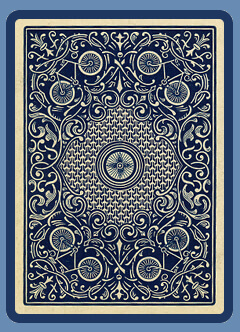
Introduced in 1907. Discontinued in 1927. A relatively common back design.
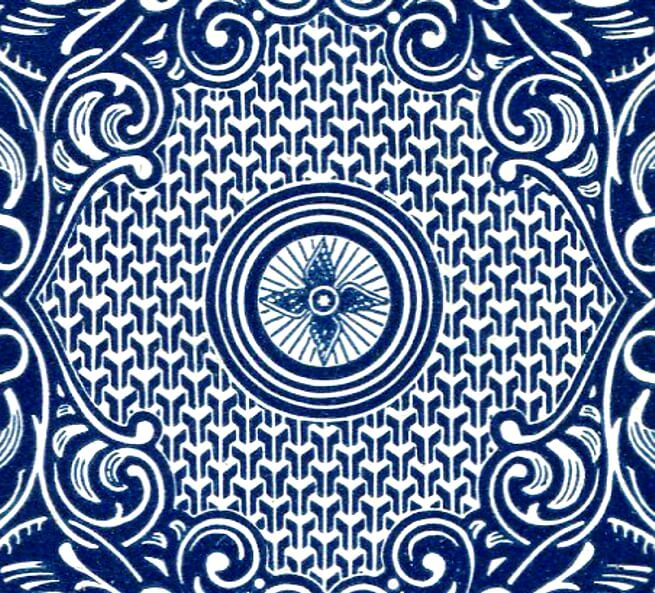
As mentioned on the Model No. 1 page, the Model back was modified in this version to include a fully symmetrical wheel with four wings as the central motif. This corrected the previous version which had an asymmetrical wheel with three wings. But, the background design on this new version of the Model back remained “one-way,” a unique choice for an otherwise symmetrical Bicycle deck with a patterned background. See a detail of the pattern, below.
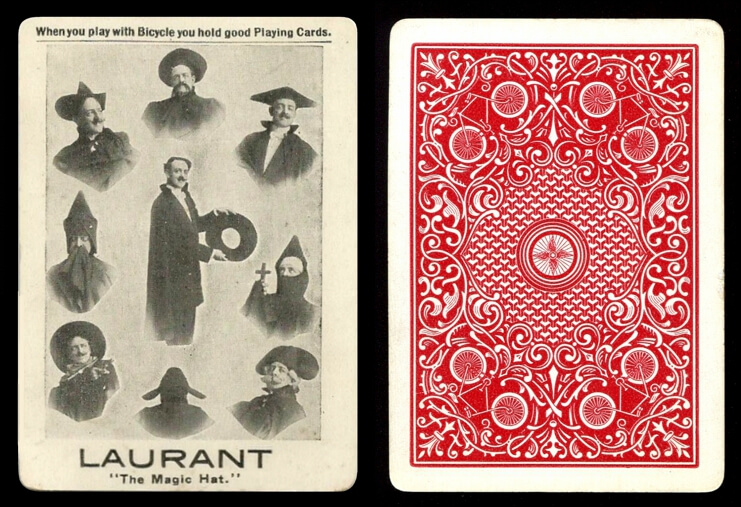
The second image, below, is a throw-out card from the magician Laurant. According to Magicpedia, Eugene Laurant (1875-1944), born Eugene Greenleaf, billed himself as the “Man of Many Mysteries.” After a highly successful career performing in rural America and on the Chautauqua circuit during World War I, he turned to school assembly shows with great success. For more information on throw-out cards, please visit throwingcards.blogspot.com.
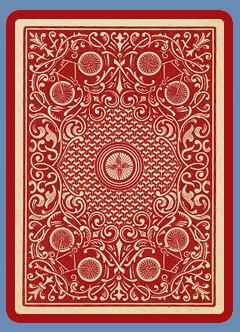
The next image shows a Canadian Model No. 2 deck from 1920, based on the “A” code on the joker. Some Canadian decks cite Windsor, Ontario as the location. This one is marked “Toronto.” I don’t know much about the history of USPCC’s manufacturing of playing cards in Canada.
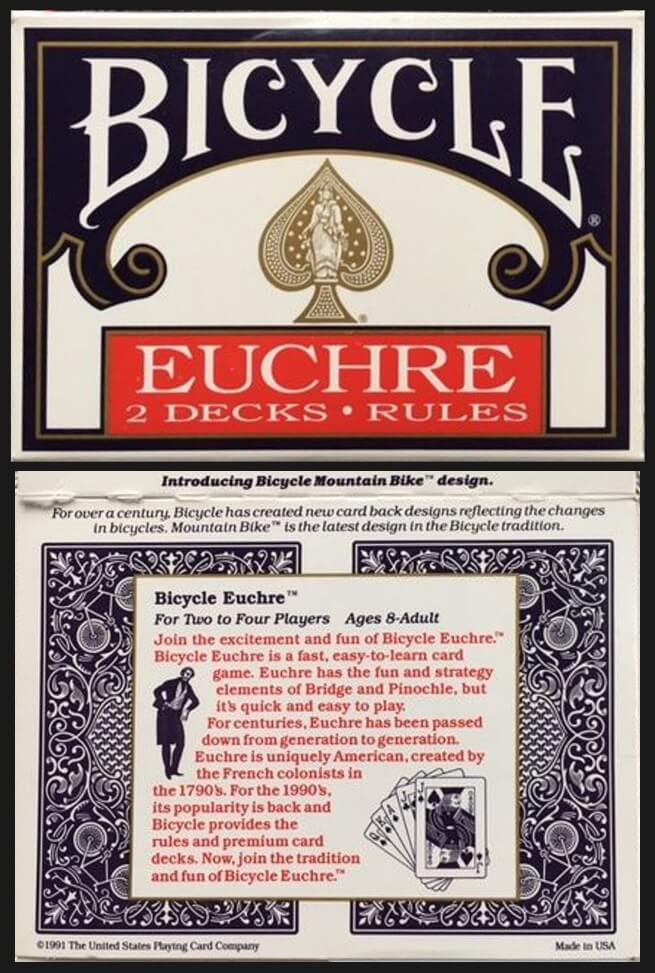
The final image shows a Euchre set that USPC produced in 1991. The Model No. 2 back is featured, but the copy states: “Introducing Bicycle Mountain BikeTM design. For over a century, Bicycle has created new card back designs reflecting the changes in bicycles. Mountain Bike TM is the latest design in the Bicycle tradition.” On close examination, there is indeed a difference from the original Model back: the tiny handlebars on the bikes go forward instead of back.
SALES DATA
A Model No. 2 ace of spades sold on eBay for $19 on September 1, 2017.
A red Model No. 2 single sold on eBay for $2.25 on October 4, 2025.